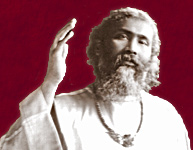

Gender Issues in The Sufi Message...... Rising Beyond the WordsIn contemporary English, many people have become strongly sensitized to gender connotations for words such as "he" or "man". Therefore, gender issues often arise nowadays when reading books and papers which were written long ago, during an era in which such words were used without any intended gender connotation. In fact, the words and papers of Inayat Khan were all carefully written in the gender inclusive langauge of the day, which some readers find troubling in the context of our present-day divisive social mores. For example, Longfellow's popular carol entitled I Heard the Bells on Christmas Day, contains the line "peace on earth, good will to men", and Phillips Brooks' O Little Town of Bethlehem uses the phrase "peace to men on earth".... neither of which are intended to imply any connotation of gender. I apologize for the challenges which this issue may cause for some contemporary readers, and offer the following thoughts to help clarify Inayat Khan's usage of such terms:
Inayat Khan, a native of India who taught in the West in the years 1910 through 1926, was using the formal English of the day, in which it was considered proper to use "he" as a gender-neutral pronoun, and to use "man" to indicate all of mankind in general. As such, there is no gender implied, and the words are used in an all-inclusive sense, without any regard whatsoever to gender. Even today, our English dictionaries still define "he" as "anyone (without reference to sex) " and define "man" as "a member of the species Homo sapiens or all the members of this species collectively, without regard to sex". Therefore, the key here, as is the case with all homonyms, is to understand the context and the author's intention.
Inayat Khan held women in the highest esteem. In fact, most of his students (to whom these words were spoken) were women, and of those students to whom he granted the highest level of initiation, all of them were women. In his personal notebooks, Inayat Khan wrote lines such as the following:
And in his autobiography he wrote: There is no line of work or study which woman in the West does not undertake and does not accomplish as well as man. Even in social and political activities, in religion, in spiritual ideas, she indeed excels man. The charitable organizations existing in different parts of the West, are mostly supported by the women, and I see as clear as daylight that the hour is coming when woman will lead humanity to a higher evolution.
No, the majority of Inayat Khan's students were women, so if his presentation to his audience was biased toward any specific gender, it would have been in favor of the women in his audience! Here is a photo of the Summer School class of 1922, which as you can see, was almost entirely women:
That was the proper formal usage of his time. At that time, it was customary and proper to use terms such as "he" and "man" as being all-inclusive, with no gender implied. Inayat Khan used the terms which were formally proper in his time, and he surely meant no disrespect for any person.
Doing so is rather impractical. There are many thousands of pages of lectures, teachings and class notes which all use this same style of speaking, so it would be a huge undertaking to attempt to change them all. Furthermore, there are thousands of copies of these books and papers already in circulation, which of course cannot be changed. Additionally, although the neuter usage of "he" and "man"
may be annoying to some contemporary readers, such usage remains (according to the
dictionary) grammatically correct.
The earnest student may encounter these three separate issues:
For some readers, words involving gender may present a difficult and emotionally charged issue. Indeed, some have even proposed that, rather than striving to understand what the teacher means, the words of the teacher should be changed. However, changing the teacher's words may not be the best solution... it may be much more useful to learn to rise above the difficulty on the wings of tolerance and understanding.
Communication can be a challenging art, often plagued by misunderstanding, personal preferences and emotional issues. In many cases, the root of the difficulty is that each person has their own personal understanding of what a specific word means. Therefore, in order to understand what another person means when using a certain word, we must strive to understand what that word means to the other person. That is, if one does not share the other person's understanding of how a word is being used, then each person will have a different view of what has been said; a situation which often results in disharmony and misunderstanding. In order to embody the message of a great teacher such as Inayat Khan, we must strive to be open, empty and willing to learn what the teacher means. But, if one is unduly distracted by one's own preferences, one's own ego, or one's own emotional issues related to the words, then the great wisdom of the teacher's message may be missed. The sincere spiritual seeker must strive for harmony, tolerance and understanding in every situation.
The basic steps in resolving our conditioned reactions are: first, becoming aware of the reaction, secondly, deeply and calmly examining the causes of the reaction, and finally, rising above the reaction on the wings of love. Even the most difficult situation becomes tolerable when our hearts are filled with love rather than resistance. Each of us has our own sensitivities, our own wounds, yet it is through situations such as this that we discover an opportunity to trade our old wounds for newfound wisdom. For some, a useful technique may be to read the troublesome passage twice; once for the head, and once for the heart. That is, on the first reading, allow the mind to raise its objections, and then on the second reading, allow the intended message to flow freely into the heart. Perhaps, if Inayat Khan were alive today, he might use different words to avoid any gender-related issues. But, these are the words that he used, and we now have an opportunity to learn to enjoy and appreciate the message that Inayat has given to us, regardless of our own preferences.
In speaking about the change of viewpoint which occurs at a certain stage of spiritual evolution, Inayat Khan said:
The role of a spiritual teacher such as Inayat Khan is to help us learn the lessons of life, the lessons of how to be compassionate, loving, understanding human beings who see the wonders of love, harmony and beauty in all of creation, empowered, enlivened and guided by the divine spark within. In order to do this, we must rise above our own personal preferences, rise above our own ego and rise above the differences that divide us. Only then will we be able to rediscover and enjoy the common ground, the common heritage, the inner unity that we all share in this wondrous journey of life.
When viewed in this light, the challenge of overcoming one's own personal preferences and personal opinions offers a wonderful opportunity to learn to control one's own ego and one's own emotions, thereby rising above such limitations. The task may seem daunting, or even unwelcome, but the results will be well worth the effort. Thus, what may at first have seemed to be a problem, blossoms and flowers into a rich and rewarding opportunity.
Beyond the words, there is a message... and it is really the message which matters. Words come and go, preferences come and go, opinions come and go, but the message lives on and our challenge is to remain focused on the task of discovering the message despite the worldly distractions.
Wishing you love, harmony and beauty,
04-May-2006
|

