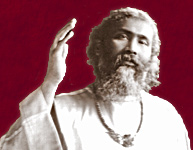

Daya and ShardaThe Love Story of Inayat Khan and Ora Ray BakerThe Summer School Program in SuresnesIn Suresnes, France, between 1922-1926,136 Inayat, Ora, and other members of the Sufi movement began a summer school program for mureeds--followers of Inayat’s Sufi movement--that started on the 5th of July and ended on the 13th of September each year. The 5th of July was an important day due to being Inayat’s birthday, referred to as "Viladat Day" by Claire, and the 13th of September, called "Hejirat Day," marked the date that Inayat and his brothers left India for the West137, with the word "Hejirat" meaning "emigration" in Arabic.138 Regarding its location, Inayat said: "Suresnes will be another Meccah"139, highlighting the importance of both the summer school and Suresnes, since Inayat drew a parallel to one of the most holy cities in the Islamic religion. The mureeds who attended the summer school came from many European countries: England, Holland, Sweden, Norway, Belgium, Germany, Italy, and Spain. Some mureeds also hailed from North and South America. Many participants arrived prior to the start date of the summer school so that they could situate themselves in new living quarters for the duration of the program. One of these lodgings, known as the "Mureed House," was located next to Fazal Manzai’s home and, as Claire called it, "a type of hotel for the Mureeds." The Mureed House was owned by some members of the Sufi Movement and had its own staff to help the guests. Even some of the mureeds who already owned summer homes in Suresnes also stayed in the Mureed House.140 The range of lodging options for such mureeds is a reminder of their wealth and the fact that many of those drawn to Inayat’s movement were members of high society. Others stayed with their friends or rented a place elsewhere.141 From Claire’s perspective, the Summer School ensured Inayat’s stay in Suresnes with his family. When Summer School ended each year, Inayat would leave to spread his message during the fall and winter, usually returning to his family in late spring. Claire recounted: "At the end of each Summer School…This was a sad time for us because our Father would then travel, departing immediately to journey to numerous countries the whole winter long. During those trips, he would stay with various Sufi adepts at their homes, or they would put him up at hotels if necessary. He would give lectures that the Sufis had arranged for him…"142 Inayat also acknowledged the time he spent away from his family. In his biography, he stated that "A life such as mine, which was wholly devoted to the Cause, and which was more and more involved in the ever growing activities of the Sufi Movement, naturally kept me back from that thought and attention which was due to my home and family."143 The mureeds not only arranged lectures for him, but also presided over many of the administrative and organizational components of the movement. It was Claire’s opinion that Inayat wasn’t fond of the administrative aspect of his work, and she observed the problems that administration and organizing brought, saying that "...there was often a heavy atmosphere in the house…"144 Adding to this heavy atmosphere was Claire’s impression as a child that life in general was hard for her mother and father. She mentioned that Inayat would only occasionally laugh and was serious most of the time. Ora "was always in the background, doing whatever she had to do…She not only had to take care of the four children…but she also wanted to sew all the clothing our father wore."145 Claire noted that Ora did not have a sewing machine and had not been taught to sew, perhaps due to her upper-class background, yet somehow managed to sew clothing for Inayat after the children had gone to sleep and she had completed her other chores. Considering that by this time they had a few servants, as evidenced by Inayat’s reference to a nurse and a cook in a 1923 letter, as well as Claire saying Ora "wanted to" do this task,146 one can speculate that Ora did it out of love rather than necessity. Inayat himself acknowledged the tremendous amount of domestic labor Ora had performed throughout her married life. Inayat wrote that "If I had not been helped by her, my life, laden with a heavy responsibility, would have never enabled me to devote myself entirely to the Order as I have. It is by this continual sacrifice that she has shown her devotion to the Cause."147 Inayat’s account suggests that Ora performed these duties out of love, but due to Claire’s previous statement that Ora was not aware that she would be expected to take care of Inayat’s family when married, it seems that traditional gender roles also played a part in the sacrifice Ora made. Claire acknowledged that such tasks took a toll on her mother. However, considering the fact that Murshida Rabia Martin had a husband and performed her duties to the Movement, the division of tasks with Inayat being a religious Sufi leader and Ora being his stay-at-home wife rearing their children may not have entirely to do with gender, although it somewhat conforms to the expectations of the time. Challenging some gender norms while still abiding by others was not a new phenomenon in Western cultures, going back to the Victorian era. As historian Karen Lystra explained, "The…man or woman….might sometimes be content with his or her role in one context and dissatisfied in another: sex-role terms had some elasticity in response to the needs of time, place, and condition."148 Indeed, this statement could be applied to Ora, who had defied gender roles by traveling to Europe by herself to be with Inayat and seized her own independence, but also, apparently willingly, took on domestic labor for her family while Inayat traveled. Ora’s Still, the pressure that Ora had faced to tend to Inayat’s relatives—a duty that she hadn’t seemed to anticipate--should be kept in mind, although there seems to be no doubt that Inayat and Ora’s love was sincere and passionate throughout their lives. For the Summer School, Inayat and Ora both had to work hard to maintain it. The summer school that Inayat and Ora ran had a specific schedule. According to Claire, "The meetings started early in the morning and continued until very late at night. In the evening there was zikr, repetition of sacred words and names; or sometimes concerts were held with various people singing with piano accompaniment, and sometimes the vina could be heard…Sometimes there were parties, a bit like garden parties, where people would dress up and socialize…Sometimes there seemed to be some very serious meetings, or occasionally dinners, around nine o’clock." On Sundays, an event called "Universal Worship" was held during the afternoon: both the title and the scheduling of the activity on Sunday add to the universality of Inayat and Ora’s movement, and the inclusion of religions for which they strived. On Thursdays, a healing service known as "Khatum", arranged by Claire’s uncles, was held after dinnertime, with halva prepared by Ora for dessert. The halva indicates that Ora’s labor for the movement did not just include caring for the children while Inayat was away, but also cooking food for events at the Summer School. Claire did not attend Summer School sessions until the later years of the School. When Summer School came to an end each year, a gathering would be held to say farewell, with a photographer attending to take pictures. This ceremony included tea parties, where people could relax with sweets. The impact of the summer school was mixed, although the majority of mureeds came away from it feeling inspired. Many looked up to Inayat as their leader, but Claire noted that there were also a few students "who thought they knew just as much or more than him." She connected this observation with one of Inayat’s poems, in which he wrote, "Some did say that I knew nothing; some did say I knew all."149 |
