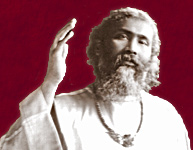

Daya and ShardaThe Love Story of Inayat Khan and Ora Ray BakerOrientalism in the USPierre’s apparent attachment to Indian culture but intense hatred for Inayat—his willingness to let Inayat become Ora’s music teacher yet not her suitor or husband--may appear contradictory at first, but reflects the larger American society at the time. This case brings to mind the public reaction in 1881 to dancer girls from India, mentioned in the introduction. At first, the advertisements of the dancers had fascinated white audiences, but once they saw the actual performance, white audiences were disappointed and angry that the girls had not fit their eroticized vision of what Indian dancers should be like, one reason being that the dancers had not revealed enough of their bodies, per an article in The Gazette.57 By contrast, Indians who performed the roles expected of them, such as the West Bengali chikondars (peddlers) from Hooghly who donned turbans and sold exotic handicrafts along the East Coast and in the South were better appreciated by the newspapers. Unlike the dancers, the male chikondars were able to play up to what the US public expected of them, such as through the wearing of turbans, and fulfill the image they had in the white American imagination. On a related note, Maggie Harold, a white woman who performed in brownface, received more acclaim than the Indian dancer girls of 1881, due to showing more of her body. However, although the chikondars were welcomed by white customers, this appreciation did not extend to acceptance of their residing in white neighborhoods.58 Similarly, Pierre’s appreciation for Inayat was limited by boundaries of race. In the case of Inayat, an Indian man, and Ora, a white woman, their romantic relationship disrupted the white heterosexual patriarchy that defined both gender and race relations in the United States. Ora, though strong and self-aware in nature, embodied in some ways the ideal white woman whose chastity and "femininity" were to be protected: ladylike, conventionally beautiful, and delicate, at least in appearance. Instead of Ora’s father, Pierre played a patriarchal role in her life, even before Inayat came into the picture, as exemplified by his changing Ora’s name. One can speculate from this action that Pierre had a significant level of control over her. Ora’s pursuit of a forbidden romance posed a serious threat to Pierre’s authority, no matter how quiet her rebellion. Not only was an Indian man crossing strict racial and cultural boundaries, acting in a way that was only deemed a right of white men, but a white woman also asserted her own agency rather than being the passive victim of an opportunistic Indian man. Two versions of the "Other" interacted intimately, defying the authority of Pierre, a white American man. In this situation, the Other readily existed and functioned independent of him. The anxiety white American men felt towards Indian men was documented in popular media and official reports. In August of 1910, a labor magazine called The White Man declared that "Both Mohammedans and Hindus are notoriously addicted to unspeakable vices that take hold of degenerate and decadent peoples."59 Later, the 1920 Report of the California State Board of Control called the Indian "...the most undesirable immigrant in the state", with a "lack of of personal cleanliness", "low morals", and "blind adherence to theories….repugnant to American principles."60 This sentiment echoed a political cartoon that appeared in The San Francisco Call in 1910, depicting Indians as unwanted and incompetent.61 This animosity went beyond magazine articles and illustrations, with acts of violence committed against Indian men by white men, as evidenced by the Bellingham Riots of 1907. The coexistence of both fetishization and outright hatred of Indian people, as well as the attitudes ranging from exoticization to scorn presented the terms of American society’s conditional acceptance of Indian people at the time: either appear the way the white patriarchal imagination expected, or risk violence. This acceptance could also be revoked at any time, even if one played by the rules, a similarity that Indians shared with other marginalized communities in the United States, with the end goal being the preservation of a society where the white man’s power remained paramount and constantly reinforced. |
