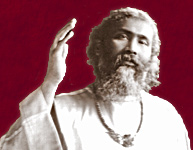

Daya and ShardaThe Love Story of Inayat Khan and Ora Ray BakerBefore World War IInayat’s work as a musician and spiritual leader involved travel, and this continued after marriage. Mr. Strangways, an acquaintance who received information about Indian music from Inayat for a book he was writing, told Inayat of the French people’s greater appreciation for art in comparison to the English. Thus, Inayat went to perform in France, and then later, Russia.62 At first, Ora accompanied her husband, his brothers, and his cousin on their travels.63 In the 1910s, Inayat’s music was gaining attention in Europe, and he became a noted figure in the musical landscape of the West. As Claire said, "In the West, Indian music was little known at the time and, therefore, much sought after. Murshid’s musical genius and his brothers’ accompaniment met with great success. Inayat met such famous divas of the day as Mata Hari, as well as Emma Nevada, and her daughter Mignon Nevada…The composers Debussy and Alexander Nikolayevich Scriabin were among those famed personalities that Inayat frequented."64 In France, Inayat had also met dancer and choreographer Isadora Duncan, whom he found to be sincere in her art.65 According to Claire, Inayat’s renown quickly spread from France to Russia, thanks to the support of a Russian socialite, "Princess Bartinov,"66 who encouraged him "to join in Moscow’s innumerable seasonal festivals, and to meet great Russian musicians, poets, and artists. Through the princess, Inayat’s brilliance reached the attention of Count Sergei L’vovich Tolstoy, a talented musician and composer and son of the famed Leo Tolstoy."67 Additionally, "The curve of Inayat’s musical genius reached its zenith…Inayat received so much recognition that, one day, the three horse drawn carriage he was riding in was unhitched and pulled by eager students and music lovers to the overcrowded concert hall."68 Inayat’s enormous musical success in France and Russia was not the only blessing the couple enjoyed, for their first child and daughter, Noor-un-nisa, who would grow up to become a famous war heroine, was born on New Year’s Day in 1914 in Moscow. The name Noor-un-nisa meant "light among women"; as Claire mentioned, "Her arrival was bathed in light which, to her parents, shone brighter than bright." Following an Indian tradition, Noor was also given a second name by her parents: Babuli, which translated to "father’s daughter."69 Inayat felt a spiritual connection with Russia. In his biography he mentioned, "I saw in the people of Russia religion, devotion, the idealistic temperament", in contrast to the "modern man" spirit he observed in France and other Western countries, where a belief in God was not at the forefront, but a hunger for Truth remained in people who did not want to see anyone else as superior to them.70 Throughout his life, Inayat seemed to be attentive to women and the roles they played in society. In Russia, Inayat attended a religious meeting with many monks and priests, noting that only one woman was present--a woman who knew English and thus could translate in order for Inayat and the priests to understand each other. Inayat’s observation of this detail, along with the female acquaintances he kept on making attest to Inayat’s positive view of women despite the cultural environment he grew up in and the attitudes he encountered later in the West. 71 Overall, Inayat achieved success in France and Russia, in terms of both his Sufi spiritual work and his music. A book he wrote on Sufism72 was being translated into both French and Russian. As he mentioned to Rabia, he gave both a performance and lecture at the Conservatory of Music in Moscow.73 However, all of it would be interrupted by growing unrest in Russia. From economic hardship and oppression that rural Russians and other common people suffered from to Russia’s decreasing status as a world power to their lack of readiness of participating in a World War spelled political turmoil for the country.74 Spending considerable time among the wealthy, privileged elite gave Inayat "an opportunity to study all the different classes of Russia, all the wealthy classes, and it showed me how the dream of life had absorbed so many of them, and where it would lead Russia in the end. It was as though God wanted to show me, before disaster came upon Russia, how even nations are led to destruction when they of their own will choose that path."75 Amidst the political upheaval and the turmoil it caused to art, music, and "the luxury of good living," Inayat and Ora’s family fled from Russia, surrounded by their friends and admirers, but not before one last legendary incident, recounted by Claire76: "On the way, a group of angry rebels had blocked the free passage, and the horses were brought to a halt. At that very moment, Inayat threw open the carriage hood, and stood lofty, his cloak flapping about him, his black hat towering tall upon his head. In Inayat’s arms lay baby Noor, whom he now lifted with both hands high above his shoulders, presenting this little treasure to the screaming crowds. In the deep blue of the night, there came a sudden hush…for a gesture of this kind happens but once. The mob drew back and watched the carriage slip into the future…only to meet with war--for this was to be their next destination in the West."77 Such a story demonstrates the romanticism that was often present in the accounts from within Inayat’s family and his mureeds, keeping Inayat and his family shrouded in a mystical air. Although Inayat had a family now, his travels continued. After fleeing from Russia, Inayat and Ora settled in Paris and London. Inayat and his brothers continued to gain musical acclaim in Paris, through their cultural performance at the International Music Congress held there in 1914.78 Soon after, Inayat traveled to Geneva, Switzerland, due to feeling a "sudden call" to go there, according to David Harper.79 In Switzerland, as his presence as a wandering mystic attracted attention, Inayat began planning a proper structure for the greater Sufi Movement he envisioned. Ora, who always openly and abundantly expressed her love in her letters, wrote to Inayat during his first visit to Switzerland, saying: "My Love, I am wondering how you are today and if you intend coming home. My precious, how I miss you, words cannot tell you. I know you must be suffering much, being alone and no one to help you and so much walking to do. I hope you will never go away alone again my love. Do write me a letter every day, I am always longing for your letters…I see nothing but clouds when you are away…" On a practical note, Ora also reminded Inayat to take care of his belongings and to remember to pick up any clothes he put up for washing in the laundry before leaving Switzerland. She ended by entreating Inayat to write to her about how he was faring. He responded with a short telegram: "Quite well. Murshid."80 Although Inayat and Ora certainly bucked some gender-role conventions of the day, with Inayat having a particularly positive attitude towards women’s leadership capability, and Ora taking control of her own life by escaping her brother, telegrams such as this one show that they also accepted patriarchal notions of women’s responsibility for cleaning and managing a household. As for Inayat’s short, blunt reply, it is not entirely clear why he responded like that. It may have been due to the cost of the telegram or a word limit, for Inayat still wrote loving letters to Ora later on. |
